"AI consultant" covers a lot of ground. It can mean someone who sits with your team and shows them how to use the AI tools you already pay for. It can mean someone who sets up software to do a repetitive job for you. It can mean a firm that builds custom software and puts AI somewhere inside it. Those are different kinds of help at different prices, and it pays to know which one you need before you hire anyone.
Three kinds of AI help
Coaching and training
Hands-on help using AI on your real work: which tools fit, how to use them well, and the guardrails that keep your data safe. This is the right place to start if your team has heard a lot about AI and hasn't yet found where it saves time. It is usually billed by the hour.
Automation
The repetitive work goes away: documents, reports, and the connections between the tools you already use. If someone on your team copies rows from one screen into another by hand, that is the kind of work automation replaces. Done well, most of it runs on plain rules, and AI only handles the steps that need judgment.
Custom tools
Sometimes the way you work doesn't fit any product on the market. Then the answer is a tool built around one business's exact workflow: a map, a dashboard, a field app, or a simple web app, with AI built in only where it earns its keep.
Where AI helps today
A few things AI already does well in tools I've built:
- Meetings that write themselves up. Record on a phone, and it comes back as a transcript with each speaker labeled and a draft note: a summary, decisions, and open items.
- Reading and sorting a lot of text. A daily dashboard I built for a local campaign collected social posts, news, and ads every day for 64 days, with AI tagging each post, so nobody had to go looking.
- Reading across everything at once. An assistant that sees every note and meeting spots connections a person would miss.
- Faster fixes. On my own projects, I send AI a screenshot of a bug and it works out the cause.
The pattern: AI is good at reading, summarizing, and sorting. It is the step in the middle of a job, not the whole job.
Where plain rules work better
Not everything needs AI. When a local community group went viral and over a thousand people asked to join in one night, the organizer didn't need a chatbot. She needed every request's answers saved to a spreadsheet and the queue approved one at a time. The browser tool I built for her does exactly that, with no AI in it. It only ever clicks Approve, and nothing leaves her computer.
Plain rules are cheaper, faster, and do the same thing every time. My approach is rules first, and AI only for the steps that need judgment. A consultant who reaches for AI on every problem will sell you something that costs more to run and is harder to trust.
Guardrails that matter
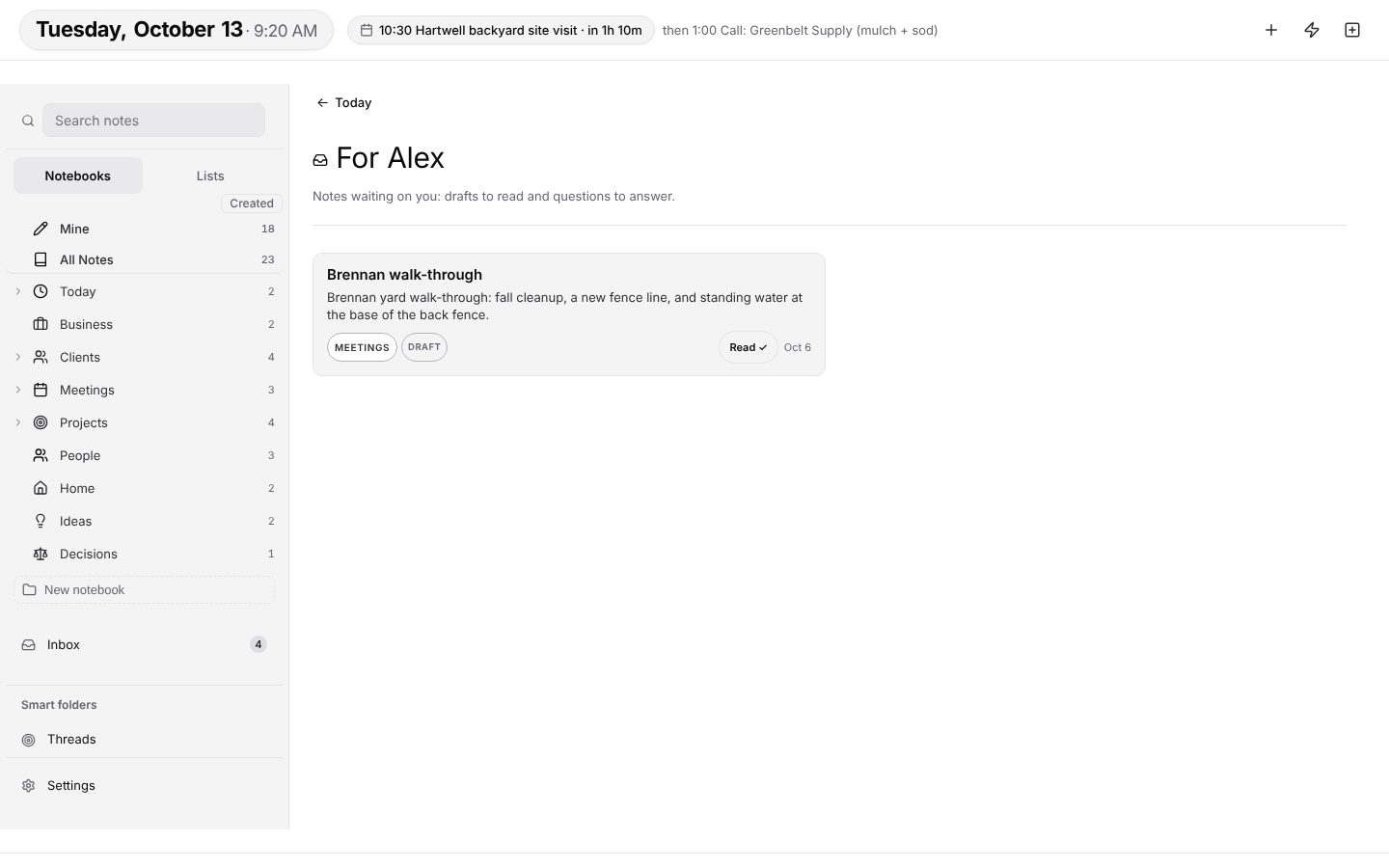
Before AI touches your business, decide what it may and may not do. In the notebook I built, drafts written by AI wait for the owner's review, and the assistant works under rules the owner sets about what it may touch. Ask any consultant the same questions: where does my data go, who can see it, and what can the AI change without a person signing off?
What it costs
AI help is usually sold one of three ways:
- By the hour, for coaching, training, and advice.
- By the project, for an automation or a custom tool, ideally at a fixed price agreed up front.
- By the month, as a subscription or retainer. Some of these are fair. Before you sign one, ask what you keep if you stop paying.
Here is how I price it. AI consulting and coaching is $250 an hour, one-on-one or with a few people from your team. Automation and custom software are a fixed price, agreed before I start, and project quotes cost nothing. There is no subscription: you pay once for the build, and the tool, the code, and the data are yours. Hosting runs on accounts you own, usually for a few dollars a month or less. When a coaching session turns up something worth building, I'll scope it at no charge, and if it isn't worth building, I'll tell you.
What to ask before you hire anyone
- What will I own when we're done? The tool, the code, and the data should be yours.
- Is there a monthly fee to keep it running? If so, what happens when I stop paying?
- Where does my data go? And who can see it?
- Will you tell me when I don't need AI? A good answer sometimes is "use a plain rule" or "buy the tool you already looked at."
- Can I see something you've built? Real work, even on made-up data, says more than a list of tools. Mine is on the work page.
When you don't need a consultant
If a product already does the job at a fair price, buy it. That goes for AI tools as much as email, accounting, or payroll. Outside help makes sense when your team keeps hearing about AI and can't find where it fits, when the same manual work eats hours every week, or when your data needs to stay under your control. Often the best answer sits in between building and buying: keep the tools that work and add the small piece that connects them.