A website and public-records research pipeline for a parent volunteer group
A volunteer parent group's website, two days from design spec to live site, and a research pipeline that gathers the public record every month, checks every claim against its source, and drafts a newsletter for two leaders to approve.
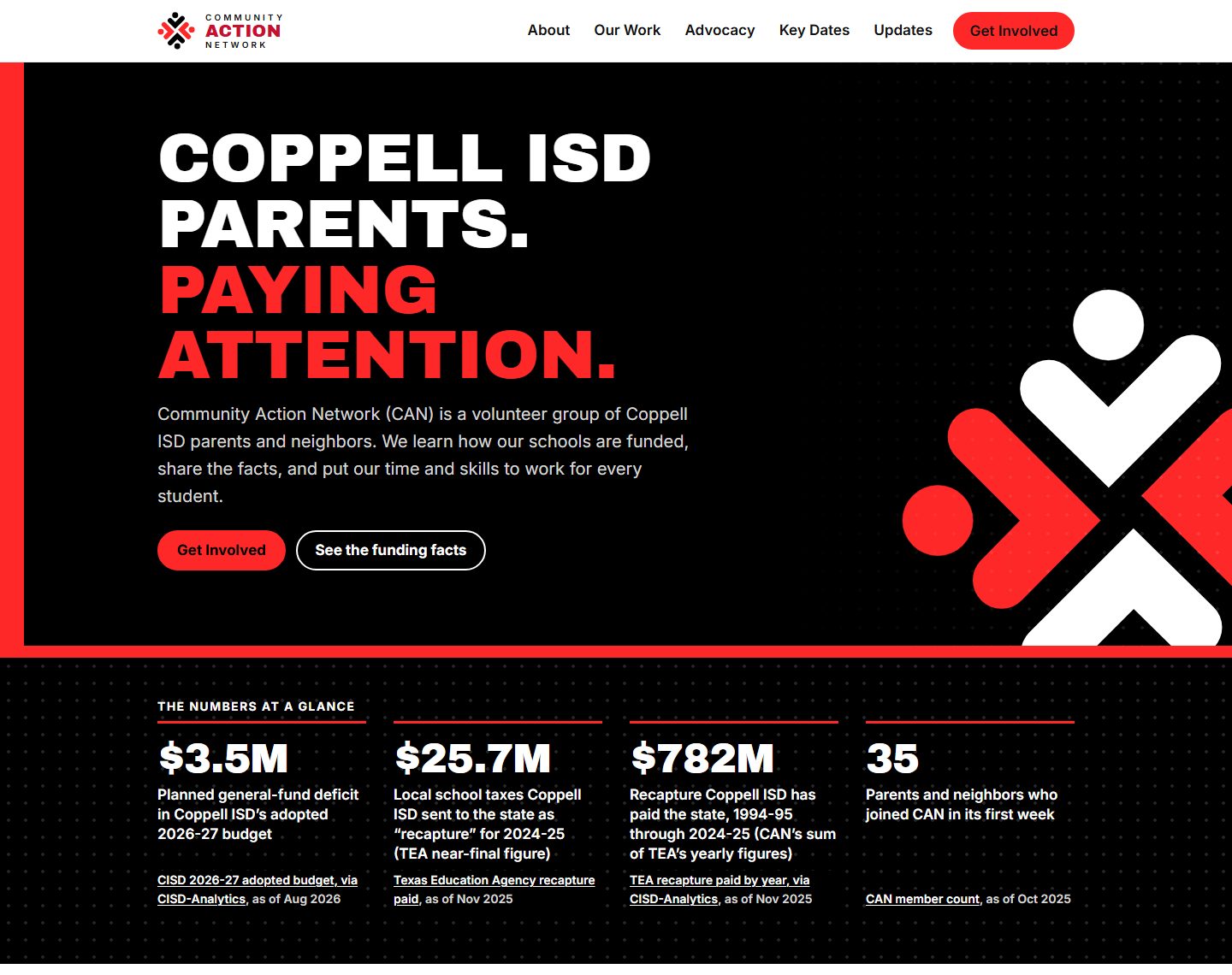
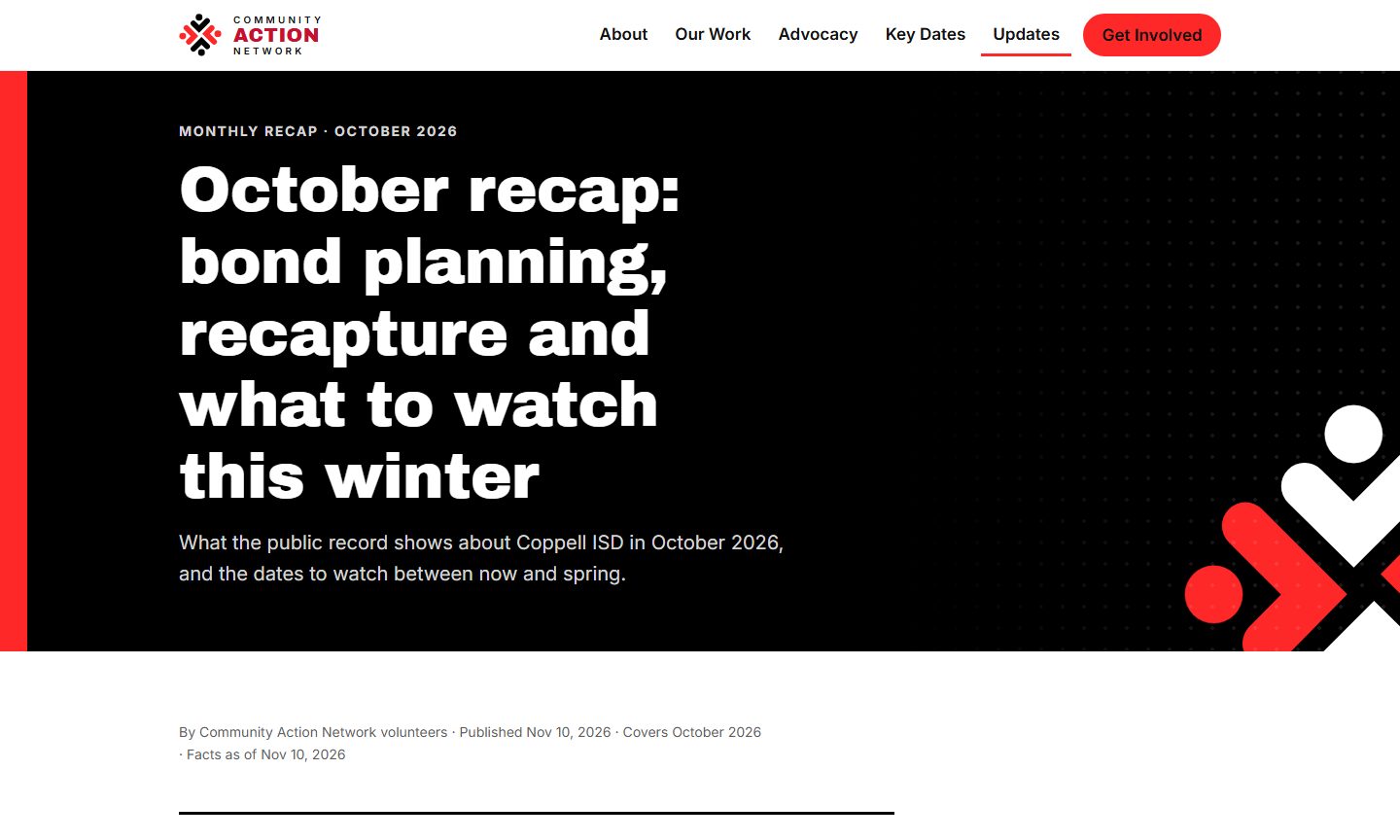
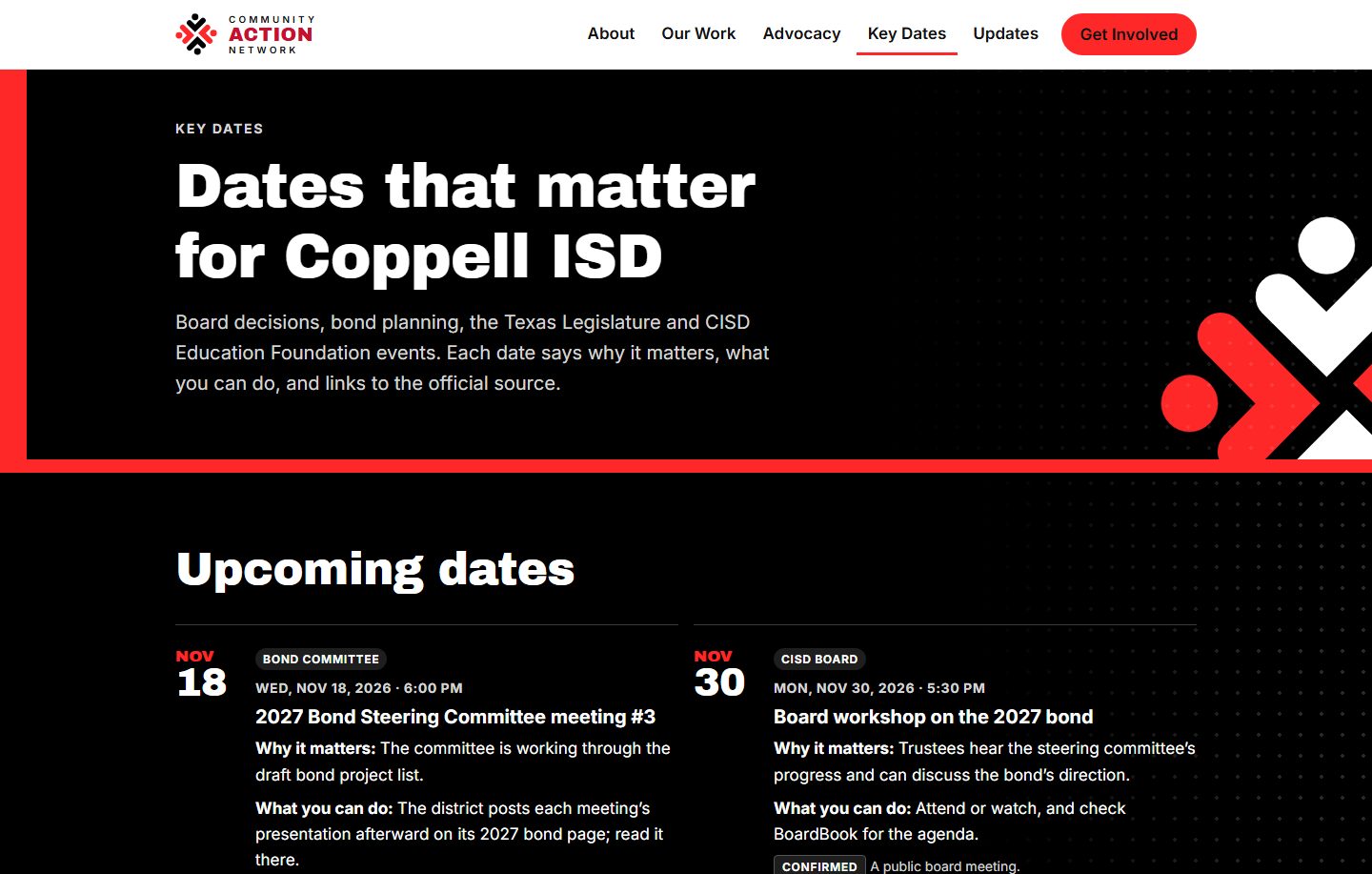
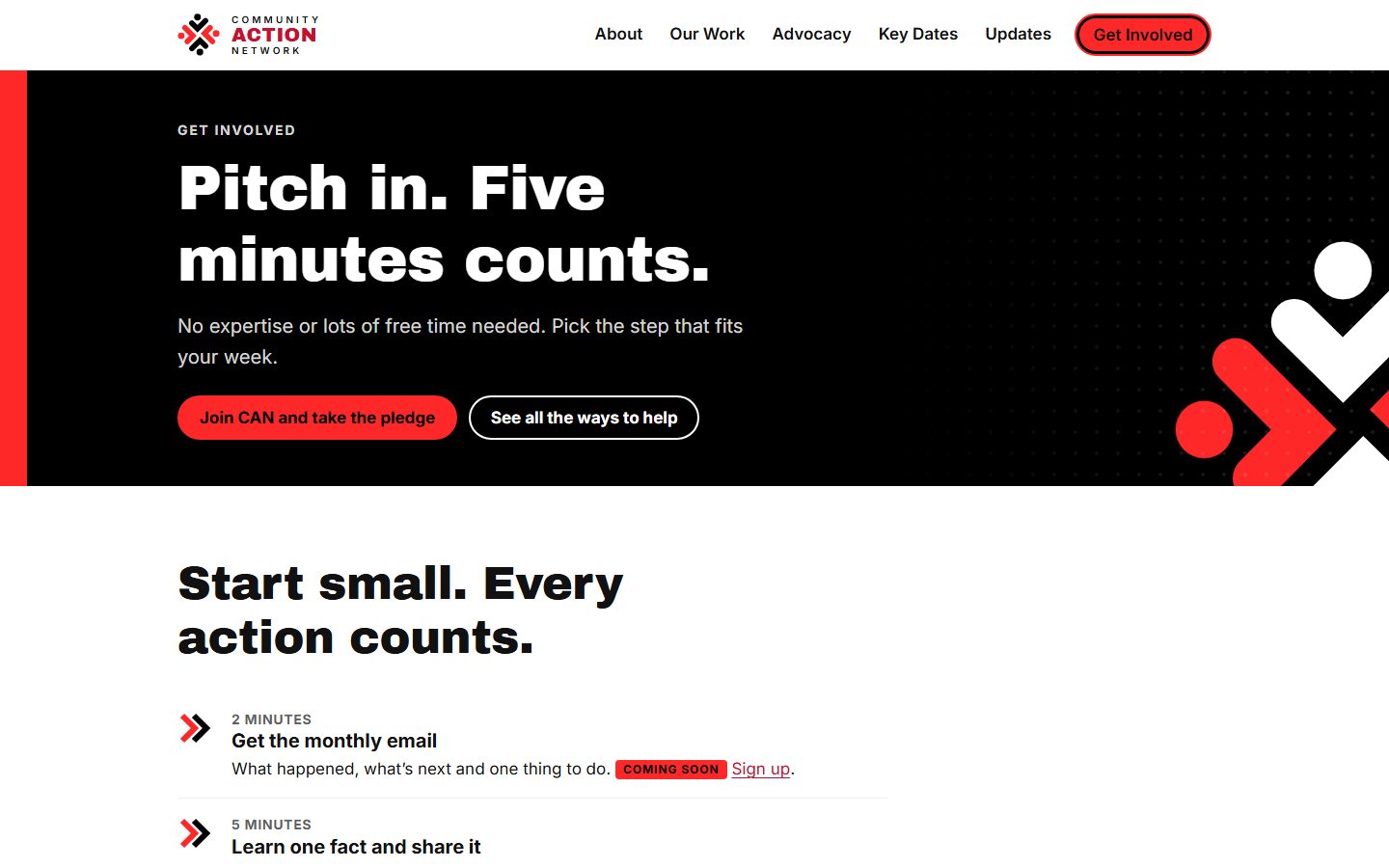
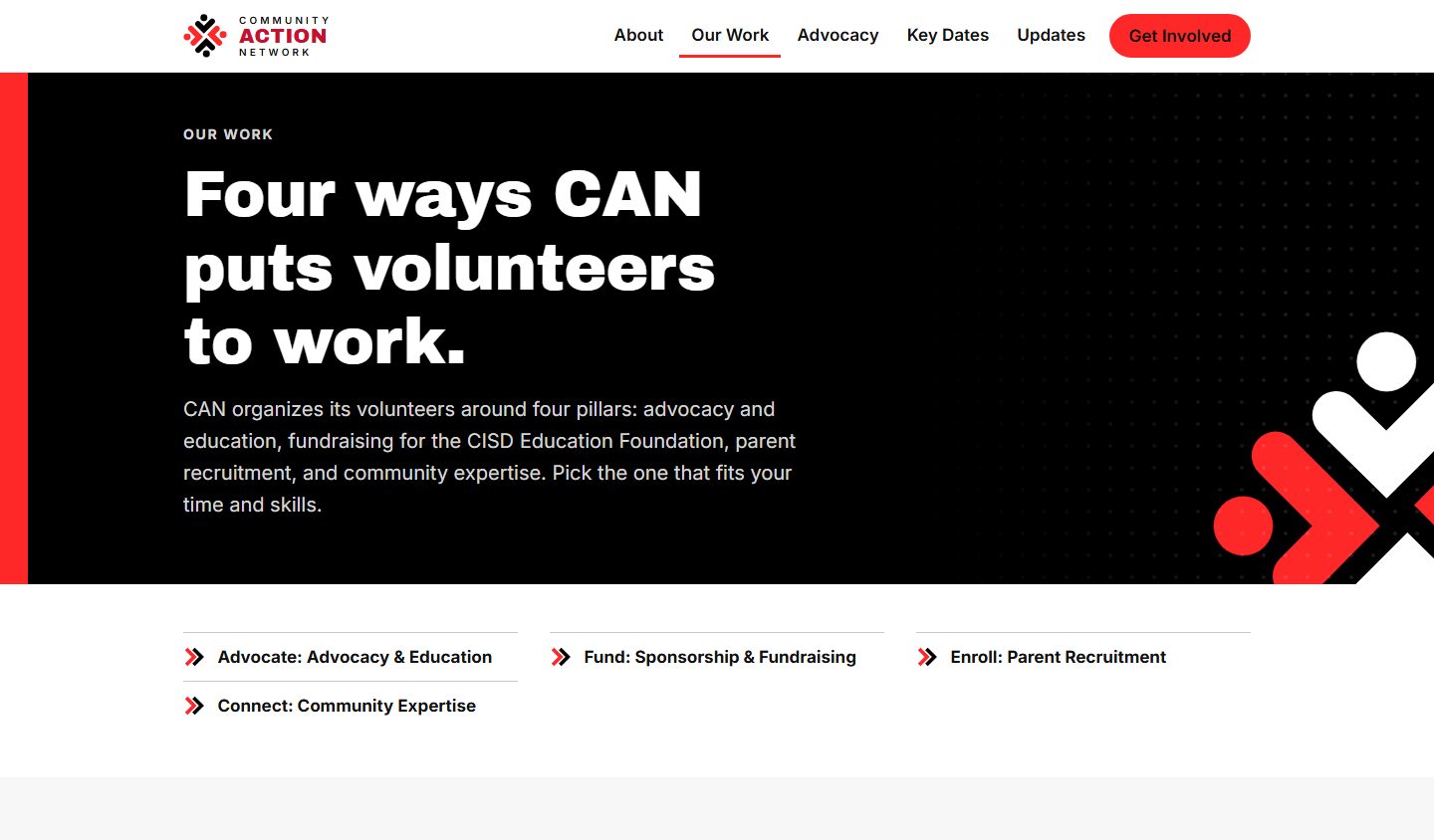
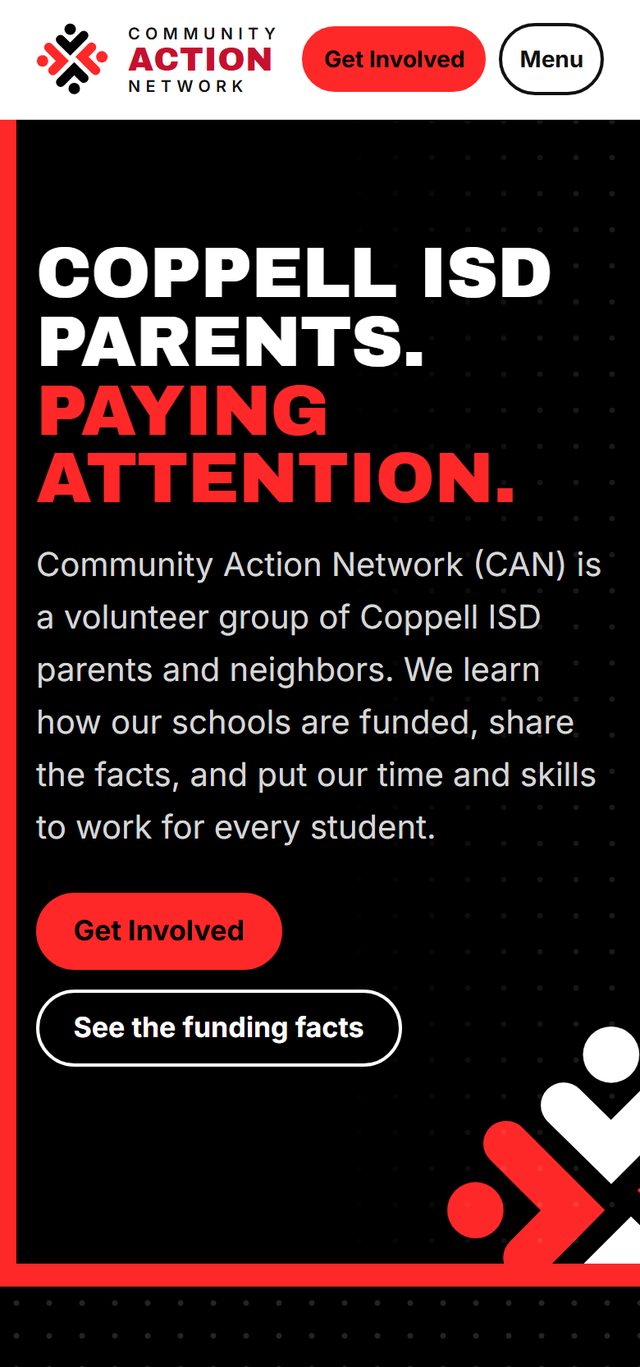
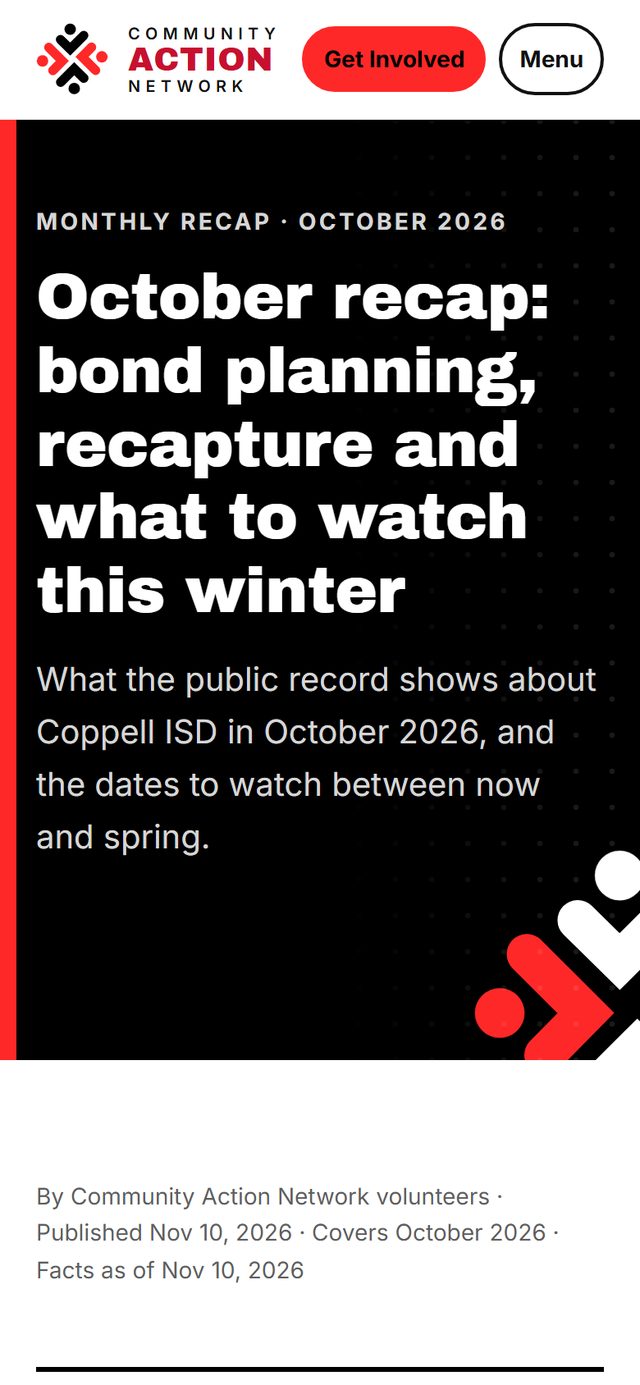
These screens are the live site. CAN is a volunteer group I help lead; the newsletter has run as a pilot, and its first emailed issue is still to come.
The situation
Community Action Network (CAN) is a volunteer group of parents in our school district that I help lead. It needed a home online that answers, in under a minute, who the group is, one sourced fact about school funding, the next date that matters, and how to join.
It also needed to keep members informed, and that is research work: watching board meetings, reading the packets and committee slides, tracking state news, and checking every fact before it goes out. That is a lot to ask of volunteers every month.
What I built
- A site with sourced figures on the home page, each with its source and an as-of date, a calendar of the dates that matter with why each one matters and what you can do, ways to help ranked by how much time they take, and monthly recaps.
- A research pipeline, built to run on a schedule, that gathers seven kinds of public sources: board agendas, documents and minutes; board meeting video; district announcements; bond committee slides; Texas education news and bills; the education foundation's updates; and figures from my district dashboard.
- A meeting transcriber and notetaker: board meeting audio becomes a transcript with each speaker labeled, and notes are drafted from it. It is the same transcriber I built for my AI notebook, and it has already been used on a real board meeting.
- It strips private details first, keeps a private, searchable archive of the transcripts, and watches itself: if a meeting goes unprocessed or a run fails, the leaders get an email.
- From that record, AI drafts a monthly issue and a short, opt-in recap after each regular board meeting. Every factual sentence carries the source passage it rests on, a checker confirms each quote and flags anything it can't match, and nothing sends until two leaders sign their approval.
Members of the public who speak at meetings are kept out of drafts, contact details become placeholders, and subscriber emails live only with the email service. The pipeline ran as a pilot on October's records, with four drafts and an independent review after each. The first emailed issue goes out once the group's accounts are set up.
For your business
A business can run the same play: a pipeline that gathers your own records and the public sources you watch, checks every number against where it came from, and drafts a monthly update for clients, owners, or a board that goes out only after you approve it.
Why custom
Newsletter tools send what you write, and research tools leave the writing to you. This one does the gathering, the first draft, and the fact check, then still waits for two leaders' approval, so a monthly research job becomes a review volunteers can do in one sitting.
Read more
Built with
Plain HTML and CSS · Cloudflare Pages and Workers · Python pipeline · AssemblyAI transcription · Claude · Resend · built with Claude Code
Have a workflow like this?
Scoping a project costs nothing, and most take a 30-minute call. Tell me where the time goes.